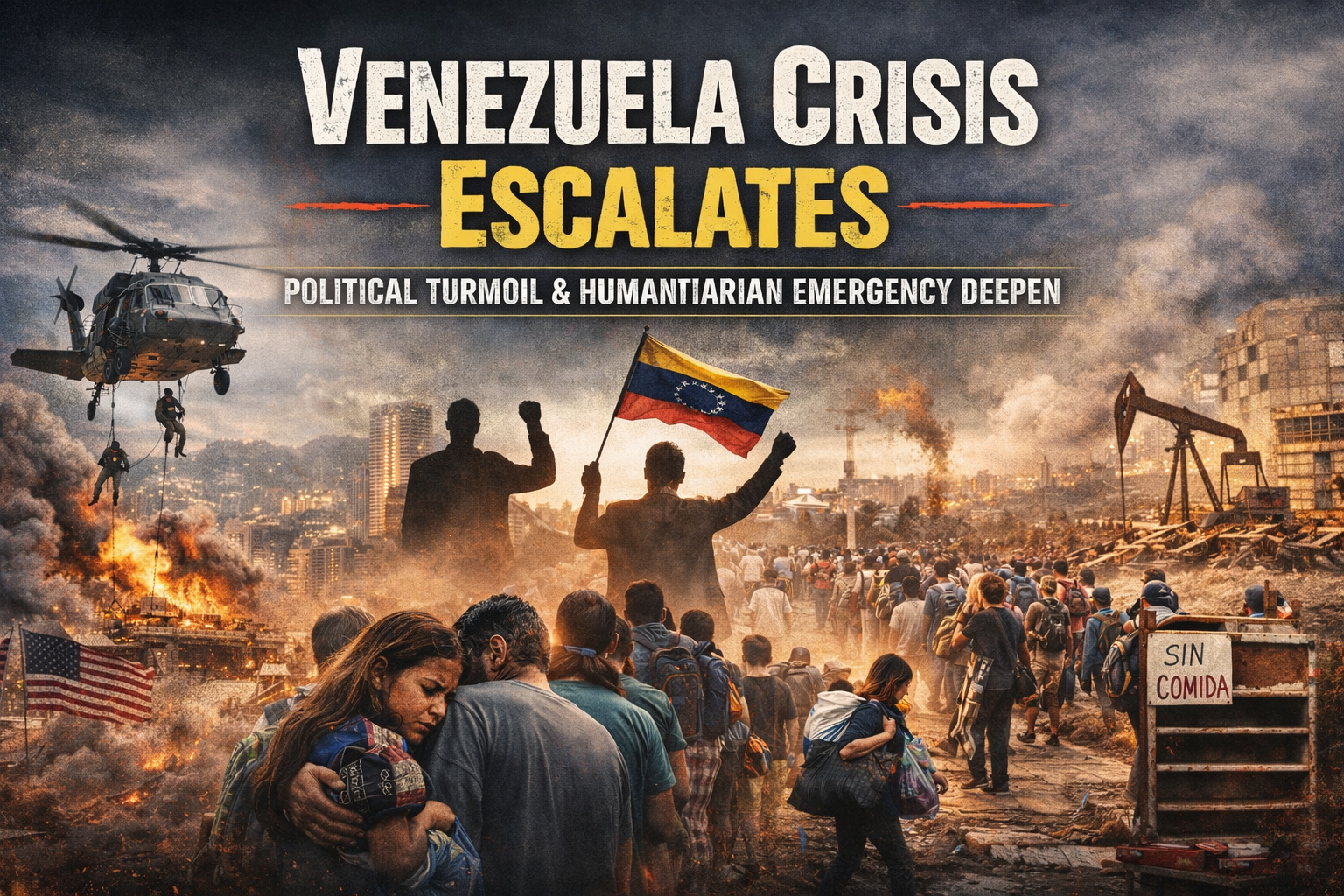
CARACAS / WASHINGTON — Jan. 3–4, 2026 — In a dramatic escalation of the long-running Venezuela crisis, the United States launched a military operation on January 3, 2026, targeting Venezuelan government sites around Caracas and capturing President Nicolás Maduro and his wife Cilia Flores. The operation, codenamed Operation Absolute Resolve, involved more than 150 aircraft and elite U.S. special forces and marked an unprecedented direct intervention against a sitting head of state. Maduro and Flores were flown to New York, where they were placed into federal custody and are expected to face narcoterrorism and cocaine-trafficking charges. Wikipedia+1
The attack triggered explosions in Caracas and prompted Venezuela’s government to declare a state of emergency. Venezuela’s Supreme Court ruled that Vice President Delcy Rodríguez should assume the responsibilities of interim president to ensure continuity of governance in the president’s absence. Rodríguez has rejected the U.S. narrative, insisting Maduro remains the legitimate leader and demanding proof of life for him and his wife. Investing.com+1
International reaction was swift and divided. The United Nations Security Council scheduled an emergency meeting to consider the legal implications of the U.S. action, which has drawn criticism from China and several Latin American governments as a violation of international law and Venezuelan sovereignty. European leaders called for a peaceful, democratic transition and respect for international norms. Reuters+1
The unfolding events have heightened regional tensions and renewed debate over foreign intervention, state sovereignty, and the future of Venezuela’s political order amidst ongoing humanitarian and economic hardship.
Chants Grip Caracas; There is fear of trump ‘Claims Control’ Over Venezuela & Its Oil
Venezuela erupts in protests after Maduro’s capture. Crowds flood Caracas streets both in support of U.S action and in outrage. Supporters demand Maduro’s release, call US action illegal, while Opposition voices expressed hope.
The Background
Venezuela has been in crisis for more than a decade, driven by economic mismanagement, corruption, and political repression. Since 2014, the country has suffered hyperinflation, collapsing oil production, and severe shortages of food, fuel, electricity, and medicine. Public sector wages have lost most of their value, pushing over 90% of households into poverty. Political tensions escalated after disputed elections in 2018 and 2024, mass protests, and the jailing of opposition figures. The humanitarian fallout has forced more than 7.7 million Venezuelans to flee the country by 2025, creating the largest migration crisis in Latin American history. https://www.unrefugees.org/emergencies/venezuela/
About The Author

Discover more from thecriticspoetry
Subscribe to get the latest posts sent to your email.